Islamic Coloring Pages as a Graphic Design Asset for Creative Projects
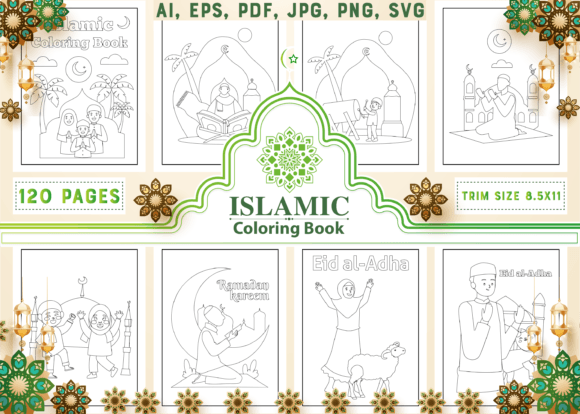
When I first reviewed this Islamic coloring pages collection, my immediate impression was of structured creativity. The designs evoke a sense of thoughtful tradition blended with artistic freedom. The visual mood is educational yet serene, rooted in cultural patterns that feel both respectful and inviting. This isn't chaotic clipart; it's a curated set of illustrations that represent a clean, illustrative style. It naturally fits clients seeking to connect with heritage, education, or community—think a handmade business selling culturally mindful products, a boutique launching a seasonal campaign around Ramadan, or a content creator building educational resources.
The Practical Fit: From Packaging to Social Posts
In real client work, the utility of a graphic design asset is measured by its adaptability. For a small business branding project, these Islamic coloring pages could serve as foundational decorative accents. Imagine applying simplified motifs from the collection to product labels for a line of specialty foods or candles. The patterns could become subtle textures on packaging design, adding depth without overwhelming the primary logo design. For a local event or Etsy shop focused on Islamic arts, these illustrations could be directly adapted into poster and invitation backgrounds, providing an immediate thematic cohesion.
For digital sellers and marketers, the asset's performance in social media graphics is promising. A single, beautifully colored page could become the hero graphic for an Instagram post series on Islamic art history. The linework is clear enough to function as a Pinterest pin focal point, guiding users toward a blog or downloadable resource. In editorial design for a community newsletter or website graphics for an educational platform, these pages can be broken into elements—isolating a geometric pattern for a sidebar, or using a full illustration as a blog visual to break up text.
Where This Design Asset Works Best
The strength of these Islamic coloring pages lies in their use as large format decorative elements and supporting brand elements. They excel as thematic collections for campaign visuals. Consider using them as full-page art in printable wall art or digital ads for a creative marketplace. For Cricut projects, the clean lines suggest good results for sticker design and t-shirt design when simplified. In product mockups, they can fill large layout areas on mockups for mugs or tote bags, becoming the primary decorative feature. Their intricate nature makes them ideal for printable designs intended for mindful activity, directly serving that core purpose.
Caution in Application: Scale and Context
However, a professional designer must also note where to use this asset carefully. The intricate details can vanish at small sizes, making them poor choices for crowded layouts like footer icons or dense infographics. On complex backgrounds, the linework may lose necessary contrast. This collection isn't suited for minimalist branding that requires stark simplicity or for professional corporate materials where visual hierarchy demands ultra-clean, non-decorative elements. The emotional appeal is specific, so forcing it into an unrelated project would harm brand consistency and visual trust.
Impact on Readability and Professional Polish
Integrating such a themed asset affects the entire design project. Its presence immediately establishes a cultural and emotional appeal, which can deeply engage a targeted audience. For readability, these graphics should accompany, not compete with, typography. Pair them with a clean sans serif font for modern design balance, or a respectful serif for traditional editorial design. They should not overlay text directly. Their use as supporting elements, rather than primary carriers of information, helps maintain a clear visual hierarchy and an overall impression of intentional, polished professionalism.
A Designer's Pre-Use Checklist
Before committing this asset to a client's commercial design project, I run through a practical list. First, test the graphics in black and white to ensure the forms hold without color. Check contrast by placing elements on both light and dark backgrounds in your mockups. Crucially, preview them at the intended small and large sizes—some intricate patterns may become muddy when scaled down for a web design badge. If the bundle includes SVG files, inspect the vector editability; can you easily detach a single motif for a logo design or sublimation design? For PNG files, verify the transparency is clean, with no residual white edges.
Always place the asset on real mockups—a t-shirt template, a mug wrap, a social media graphics template—to see how it interacts with real-world dimensions. If print quality is a concern, such as for printable designs or packaging details, test a print at high resolution. Finally, and most importantly, confirm the commercial license terms explicitly. Never assume. For use in an Etsy product, print-on-demand service, or any client’s marketing visuals, you must have clear rights for commercial application. This due diligence protects your client's business and your professional reputation.
Final Judgment for a Real Client Scenario
Let’s frame this around a real case: a client is launching an online product line of educational kits for children focused on Islamic culture. This Islamic coloring pages collection becomes more than just clipart; it’s a core creative design resource. It can provide consistent illustration styles across their website graphics, product packaging design, and supporting digital ads. Elements can be extracted for Canva templates they offer to their community. The familiar, respectful patterns build visual recognition and trust with their audience.
For this project, the asset works. It supports the design direction by providing ready-made, culturally appropriate visuals that would be time-consuming to illustrate from scratch. It improves the visual mood by infusing the brand with warmth and educational intent. It helps the final result feel polished because it offers a cohesive library of graphics, ensuring the brand identity doesn’t feel piecemeal. For designers, brand owners, and content creators working within specific cultural or thematic niches, such a targeted digital product can be the efficient, quality bridge between a concept and a compelling, market-ready visual presentation.